How to Reduce No-Shows at Your Spa: 7 Tactics That Actually Work in 2026
If your spa manages 5 therapists and averages just two no-shows or late cancellations per day, you are burning roughly $3,800–$5,200 every month in pure profit.
In the spa industry, time is an expiring asset. Once a 90-minute slot passes with an empty treatment bed, that inventory is gone forever, while your fixed overhead—therapist base pay, room utilities, and specialized equipment leases—remains completely unchanged.
Many owners hesitate to fix this because they fear a strict spa cancellation policy will alienate regular clients. In practice, honest clients respect clear boundaries, and chronic offenders are costing you more than they are worth.
To structurally reduce no-shows across your spa, you need an operational framework that relies on systemic automation rather than front-desk awkwardness.
Here are seven tactical moves that protect your calendar and your margins.
1. Require a Card to Secure Every Booking
The most effective way to reduce no-shows is requiring clients to save a payment card when they book an appointment.
Whether the booking is made online or over the phone, the card should be securely stored using your payment provider's encrypted tokenization technology. This means your spa never stores the customer's actual card details, while still allowing you to enforce your cancellation policy when necessary.
A booking without a saved payment method is simply easier to ignore or forget.
When clients know their reservation is backed by a saved card, they are far more likely to honor their appointment or cancel within the allowed time window.
This small change creates accountability, reduces last-minute cancellations, and protects valuable treatment room availability without requiring uncomfortable conversations from your front desk staff.
2. Deploy Tiered Cancellation Windows
A blanket 24-hour cancellation policy doesn't scale across every service.
A 45-minute eyebrow appointment shouldn't follow the same rules as a three-hour bridal package.
Build policies around resource intensity.
| Service Type | Cancellation Window | Late Fee |
|---|---|---|
| Standard Services (Under 60 min) | 24 hours | 50% |
| Premium & Multi-Resource Packages | 48 hours | 75% |
| Group Bookings / Buyouts | 7 days | 100% Deposit |
3. Move Reminder Loops to WhatsApp
Email reminders are often ignored.
Phone calls go unanswered.
WhatsApp reminders consistently receive significantly higher engagement.
A reminder workflow should look like this:
[Appointment Secured]
          │
          ▼
[48 Hours Before]
          │
          ▼
[24 Hour Confirmation]
     ┌───────────────┴───────────────┐
     ▼                               ▼
Confirm Appointment          Reschedule Appointment
     │                               │
Calendar Locked          Opens Booking Portal
Every reminder should contain a clear call-to-action:
Reply 1 to confirm your appointment or tap the link to reschedule.
4. Make Rescheduling Frictionless
Many clients don't intentionally no-show.
They simply realize too late that they can't make the appointment.
If rescheduling requires calling the front desk after business hours, they'll often do nothing.
Instead, include a self-service rescheduling link in every reminder.
The system should automatically:
- Allow free changes outside the cancellation window.
- Display applicable cancellation fees inside the protected period.
- Instantly release the slot back to the booking calendar.
5. Automatically Fill Last-Minute Openings
When cancellations happen, your reception team shouldn't start calling clients manually.
Instead, trigger your waitlist automatically.
Late Cancellation
        │
        ▼
┌──────────────────────────────┐
│ BarbNow Waitlist Engine      │
└──────────────────────────────┘
        │
        ▼
Send WhatsApp Alerts
to Top 3 Waiting Clients
        │
        ▼
First Client Accepts
        │
        ▼
Appointment Filled
Instead of losing revenue, the appointment is automatically reassigned to the first available client.
6. Restrict High-Risk Clients Automatically
Not every customer carries the same booking risk.
Clients with multiple no-shows should automatically move into stricter booking rules.
For example:
- Require 100% prepaid deposits.
- Disable standard online booking.
- Restrict appointments to same-day availability.
- Flag the profile for staff visibility.
These policies should happen automatically rather than relying on staff memory.
7. Operational Integration with BarbNow
Trying to enforce these policies manually while answering calls, checking clients in, and processing payments creates unnecessary operational complexity.
BarbNow spa management software centralizes these workflows into one platform.
It provides:
- Automated policy enforcement without awkward conversations.
- Real-time waitlist routing that fills cancellations automatically.
- Require a card for online bookings.
- Risk scoring that identifies repeat offenders.
- Integrated scheduling across therapists, treatment rooms, and equipment.
The Bottom Line
Reducing no-shows isn't about punishing clients.
It's about protecting your therapists' time, maximizing treatment room utilization, and ensuring your business operates profitably.
The most successful spas don't rely on reminders alone.
They build automated systems that make showing up the easiest—and most natural—choice for every client.
Related Reading
How to Run a Profitable Salon in 2026: The Complete Operational Playbook for Owners
Stop treating your salon like a creative studio and start managing it like a high-yield retail asset. Here is the data-driven framework to optimize chair utilization and protect your gross margins.
Spa Staff Scheduling: How to Build Rosters That Don't Cause Therapist Burnout
Therapist turnover costs a spa thousands in lost client relationships and recruitment marketing. Here is the operational framework to balance capacity, utilization, and therapist wellbeing.
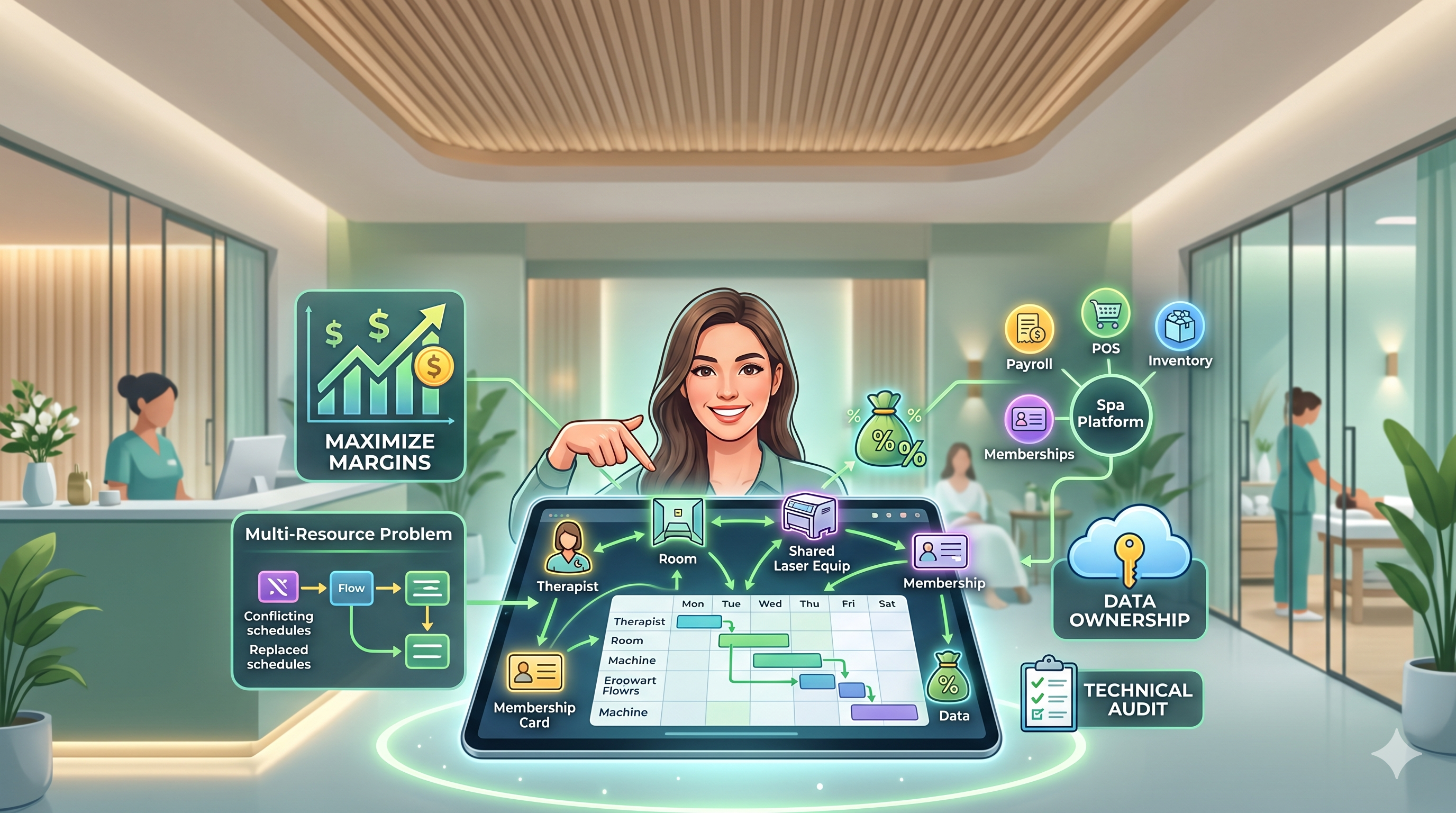
How to Choose Spa Management Software in 2026: The No-Fluff Buyer's Guide
Stop bleeding revenue from calendar gaps, unoptimized rooms, and complex manual payroll math. Here is the definitive operational framework for choosing spa software that protects your storefront margins.