5 Salon Industry Trends Shaping 2026
5 Salon Industry Trends Shaping 2026: The Action Plan for Maximum Profitability
Running a profitable salon has become harder over the last few years. Rent is higher, wages have increased, clients expect online booking, and marketing costs continue to rise. At the same time, customers have more choices than ever.
One pattern we repeatedly see is that salon owners focus heavily on attracting new clients while losing existing ones because there isn't a consistent follow-up process after checkout.
Here are five trends changing how successful salons operate.
What's Changing in Salon Operations?
Before diving into the specific operational blueprints, it is critical to understand how the foundational mechanics of salon profitability have evolved.
| The Outdated Salon Model (Pre-2026) | The Modern Salon Model (2026 and Beyond) |
|---|---|
| Transactional Visits: Relying on clients remembering to book their next appointment, leading to irregular cash flow. | Predictable Recurring Revenue: Utilizing multi-tiered memberships and automated subscription packages to secure baseline monthly revenue. |
| Legacy Local Search: Relying on simple website SEO and standard business directory listings to generate web traffic. | AI-Powered Local Discovery: Optimizing for AI search summaries and Google’s Map Pack algorithms through real-time review velocity and structured data. |
| Emotional Pricing: Copying competitors or setting prices based on "gut feeling," leading to silent margin erosion. | Math-Based Pricing: Calculating prices strictly by cost-to-deliver, chair time, material depletion, and target net margins. |
| Surface-Level Notes: Keeping basic, paper-based or disjointed digital notes regarding client preferences and past visits. | Better Client Personalization: Leveraging integrated CRM platforms to trigger automated, behavior-based rebooking and track precise biometric data. |
| Aesthetic-Only Menus: Offering standard cut, color, or nail services with low-margin, time-heavy execution. | Health-First Service Suites: Incorporating high-margin trichology, scalp wellness, and root-level diagnostic treatments. |
Trend 1: The Move to "Health-First" & Scalp Wellness
More clients are investing in long-term hair and scalp health instead of occasional cosmetic treatments. Services like scalp analysis, head spas, and trichology are becoming regular appointments rather than luxury add-ons.
Scalp wellness isn't just another premium service. It changes how often clients return. While colour appointments might happen every 8–12 weeks, scalp treatments naturally encourage monthly visits.
The Financial Impact
- Average Ticket Size Boost: Integrating a 15-minute diagnostic scalp analysis and custom detox treatment into a standard service routinely increases ticket sizes by 35% to 50% without requiring an entirely new block of chair time.
- Rebooking Velocity: True wellness treatments require cumulative maintenance. A client may wait 8 to 12 weeks for a balayage touch-up, but a scalp rejuvenation protocol requires a strict 3- to 4-week rebooking cadence. This shortens the days-between-visits metric, directly driving up Client Lifetime Value (CLV).
Trend 2: AI-Powered Local Discovery as the New Search Engine
Five years ago, having a website and an Instagram page was enough for many salons. Today, clients increasingly discover businesses through Google Maps, AI search assistants, and review platforms. If your salon isn't visible there, you're missing bookings before customers even compare prices.
Google increasingly answers questions directly instead of showing ten blue links. That means your reviews, service descriptions and Google Business Profile matter more than ever.
💡 Pro-Tip: Automating the Discovery Engine
Modern salon management software completely removes the manual burden of Local SEO. Top-tier platforms feature automated review triggers that send a direct, un-gated review link via WhatsApp or SMS exactly 90 minutes after a client check-out. By maintaining a continuous velocity of fresh, keyword-rich reviews detailing specific services (e.g., "scalp facial" or "airtouch balayage"), your business automatically rises to the top of AI search indices and Map Packs without spending a single dollar on paid ads.
Trend 3: The Subscription Economy (Salons as a Membership Model)
Instead of starting every month with zero guaranteed revenue, many salons are introducing memberships that generate predictable monthly income.
Memberships work particularly well for salons because clients already return on a regular schedule for maintenance. Successful 2026 membership architectures generally fall into three distinct tiers:
- The Maintenance Tier: Structured around routine, high-frequency services. For example, a monthly fee covering two blowouts, a deep conditioning treatment, and a 10% discount on retail products.
- The VIP Priority Tier: Designed for high-paying color or extension clients. Members pay a monthly retainer that guarantees priority access to prime weekend booking slots, complimentary emergency bang or fringe trims, and early access to guest artist slots.
- The Curated Retail Subscription: Automated replenishments of prescribed home-care regimens (shampoos, serums, supplements) billed monthly and ready for pickup or shipped directly to the client's door.
Predictable Monthly MRR ──> Guaranteed Payroll Coverage ──> Shielded Net Margins
By securing predictable revenue streams, salon owners can confidently cover fixed operational overhead—such as rent and baseline payroll—before the doors even open on the first of the month.
Trend 4: Better Client Personalization via Deep CRM Data
We regularly see repeat bookings increase after salons start recording colour formulas and sending rebooking reminders automatically instead of relying on staff memory.
Imagine a client walks in after four months and your stylist instantly knows the previous colour formula, the toner used, and that she prefers appointments on Friday afternoons. That experience is difficult for competitors to replicate.
Winning salons leverage deep CRM (Customer Relationship Management) architectures to build bulletproof client profiles. This goes far beyond basic contact information. A future-proofed CRM tracks:
- Granular Technical History: Exact color formulations down to the gram, processing times, developer volumes, and brand lines used across past visits.
- Biometric & Lifestyle Limitations: Scalp sensitivities, product allergies, styling limitations (e.g., "cannot style hair with high heat due to chemical damage"), and personal preferences (e.g., "prefers a quiet chair / no small talk").
- Behavioral Rebooking Triggers: The system analyzes the client’s historical average visit frequency. If a client typically books every 35 days but has hit day 42 without an appointment on the schedule, the CRM automatically deploys a hyper-personalized reengagement message via their preferred communication channel.
💡 Pro-Tip: Eliminating Human Friction at Checkout
Do not rely on your front-desk staff or busy stylists to manually update these data points or execute follow-ups. Ensure your salon platform is configured to mandate formula updates before an invoice can be cleared. Furthermore, leverage behavioral data to automate automated SMS rebooking workflows. When the system detects a lapse pattern, it can automatically suggest three open slots matching the client's historical booking time preferences (e.g., "Fridays at 4:00 PM").
Trend 5: Math-Based Pricing vs. Margin Churn
With global inflation driving up the cost of backbar formulations, foil, utilities, and wages, operating on historical or competitor-copied pricing is a direct path to bankruptcy. Many owners suffer from "emotional pricing"—fearing that raising a service price by $10 will cause a mass exodus of clients.
In 2026, Pricing based on competitors is becoming increasingly risky because product costs and wages continue to rise. Salons must transition to a Cost-to-Deliver (CTD) model combined with Chair Time Margin Protection. Every minute a client sits in a chair incurs a fixed operational cost, calculated by dividing total fixed monthly salon overhead by the number of active chairs and operational hours.
If a colour service takes three hours instead of two because of corrective work, charging the same price simply because your competitors do means you're losing money on every appointment.
The Profitability Formula
To guarantee a healthy 25% to 35% net margin, pricing must be broken down into three rigid components:
Service Price =
(Chair Time Cost per Minute × Duration)
+ Exact Cost of Product Consumed
+ Target Net Profit Margin
If a complex color correction takes 240 minutes of chair time, the price must reflect that reality, irrespective of what the salon across the street charges. Modern businesses utilize real-time inventory tracking where color and product are weighed or logged per service, with the exact material cost instantly appended to the client invoice.
💡 Pro-Tip: Real-Time Backbar Optimization
Implement salon management software that connects your digital inventory directly to your point-of-sale (POS) terminal. When a stylist checks off a "Full Highlights" service, the software should automatically deplete the exact average amount of lightener and developer from your stock records. This ensures real-time cost tracking and automates purchase orders when stock hits critical reorder thresholds, eliminating manual counting errors and protecting product margins.
The 2026 Action Plan: Strategic Execution
You don't need to implement all five changes this month. Start by fixing the biggest constraint in your business.
- Not enough bookings?, Improve your local visibility.
- Revenue fluctuates every month?, Introduce memberships.
- Busy but not profitable? Review your pricing.
Small operational improvements compound over time, and the salons that consistently make those improvements are usually the ones that continue growing.
The tool that ties this entire blueprint together is your salon management software. Choose a platform that automates the administrative heavy lifting—billing, review generation, CRM triggers, and inventory tracking—so your team can focus on what they do best: delivering an unparalleled, high-value consumer experience. Most of these trends don't require hiring more staff or spending heavily on marketing. They require better systems.
Whether it's memberships, automated reviews, smarter pricing, or inventory tracking, small operational improvements compound over time.
That's why salon management software has become one of the most valuable investments a growing salon can make.
Ready to future-proof your salon’s margins? You don't have to build these systems from scratch. BarbNow was built specifically to automate the heavy administrative lifting—from automated membership billing to algorithmic inventory tracking—so you can focus on the art while the software secures the engine.
Related Reading
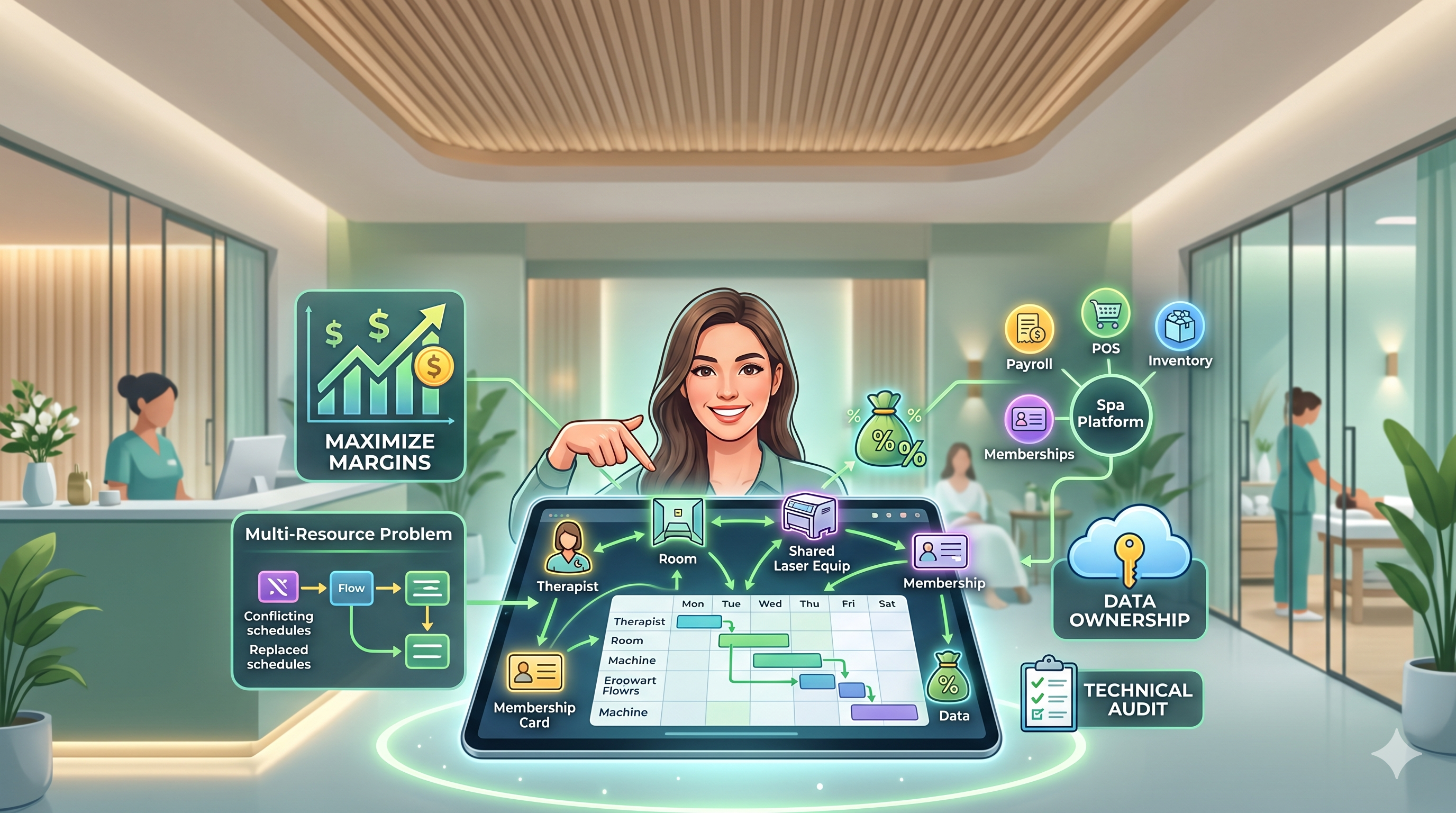
How to Choose Spa Management Software in 2026: The No-Fluff Buyer's Guide
Stop bleeding revenue from calendar gaps, unoptimized rooms, and complex manual payroll math. Here is the definitive operational framework for choosing spa software that protects your storefront margins.
How to Reduce No-Shows at Your Spa: 7 Tactics That Actually Work in 2026
A 12% no-show rate isn't just an annoyance — it's a structural leak that expires your service inventory. Here is the operational playbook to drive absences below 2%.
How to Run a Profitable Salon in 2026: The Complete Operational Playbook for Owners
Stop treating your salon like a creative studio and start managing it like a high-yield retail asset. Here is the data-driven framework to optimize chair utilization and protect your gross margins.